American myths, cut by hand from the sources that made them.

Original collage. Comic books, sheet music, packaging. Each work is one of one.

Up close

Every color is a piece of printed paper, cut by hand and laid one at a time.

Detail of Fab Four Ever: a London bus whose windows are concert ticket stubs
Fab Four Ever. Every window of the bus is a concert ticket stub.
Detail of Chai and Mighty: Superman surrounded by strips of comic panel
Chai and Mighty. The strokes of the letter are strips of comic panel.
Detail of Spider-Spangled Banner: the white stripes of the flag
Spider-Spangled Banner. Every white stripe is a piece of dialogue.
Process

Every piece is cut from the real thing.

Nothing is printed, scanned, or reproduced. The comics, sheet music, and packaging are the actual material, cut apart by hand and rebuilt one fragment at a time.

1

Imagining

A piece starts with a subject worth spending months on: a hero, a place, a memory worth rebuilding by hand.

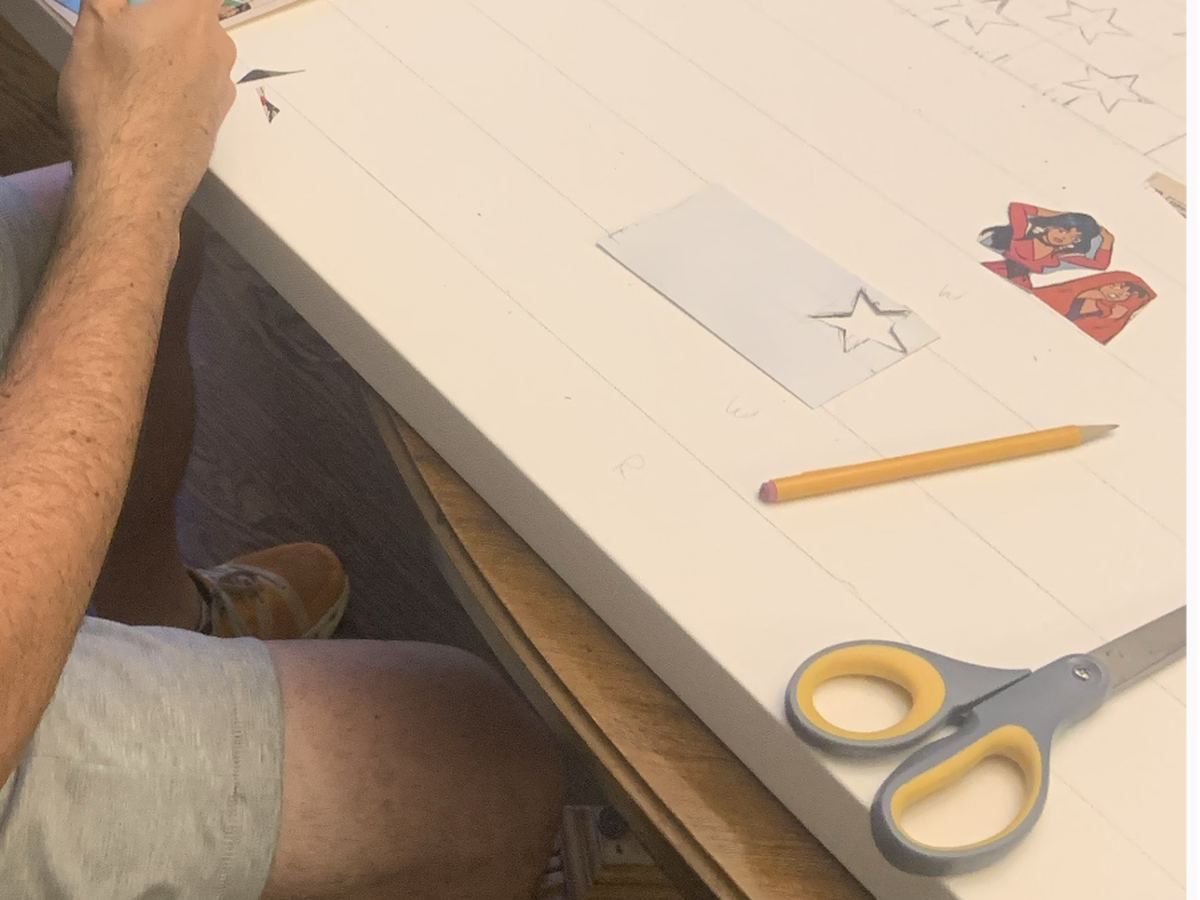
Bare canvas ruled in pencil, with a hand-drawn star template
2

Sourcing

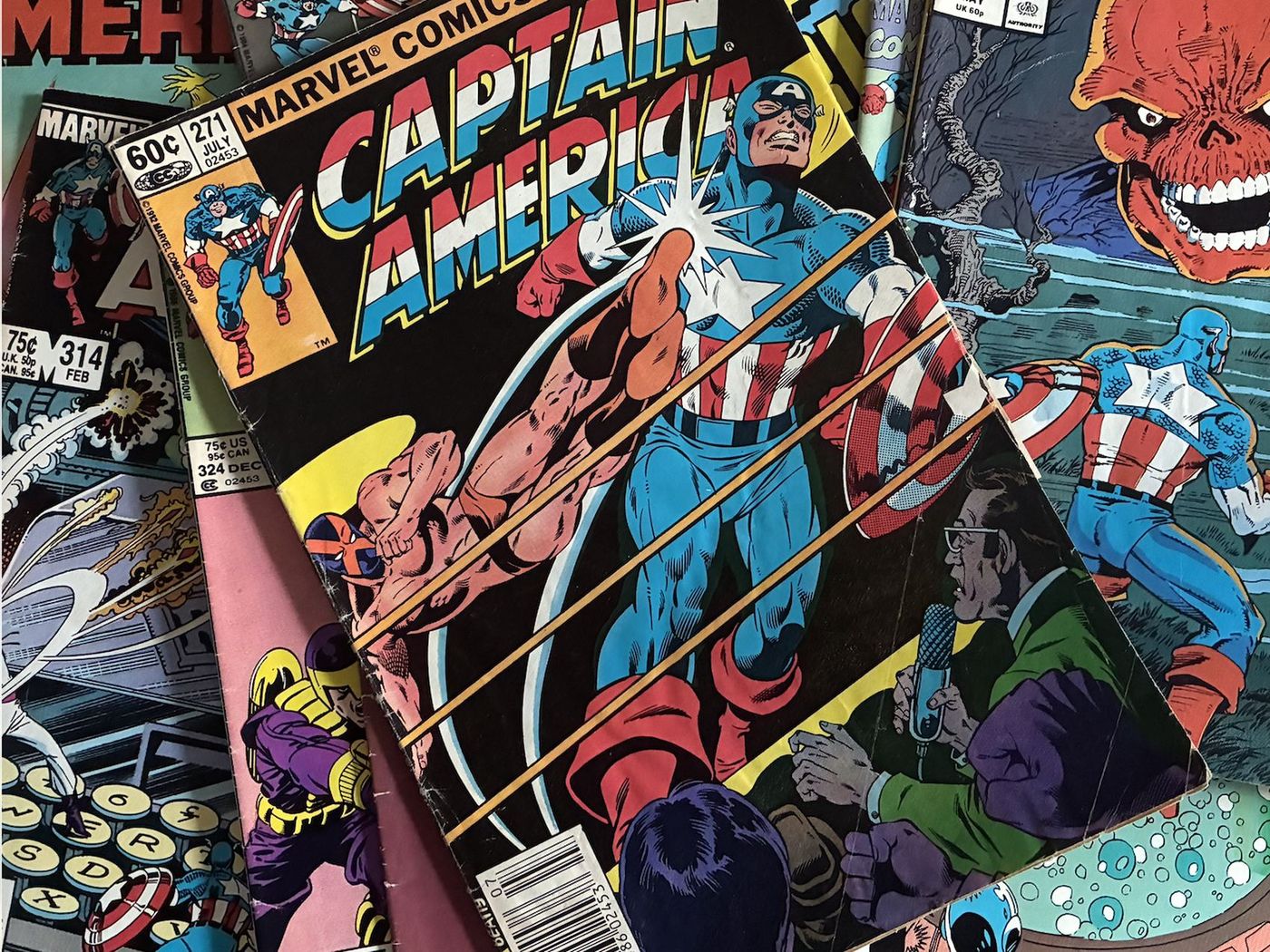
The comics, packaging, and printed material are hunted down, never printed or bought new. Part of the sport is finding material that fits the idea, and enough of it to see the piece through.

A spread of vintage Captain America comics gathered as source material
3

Designing

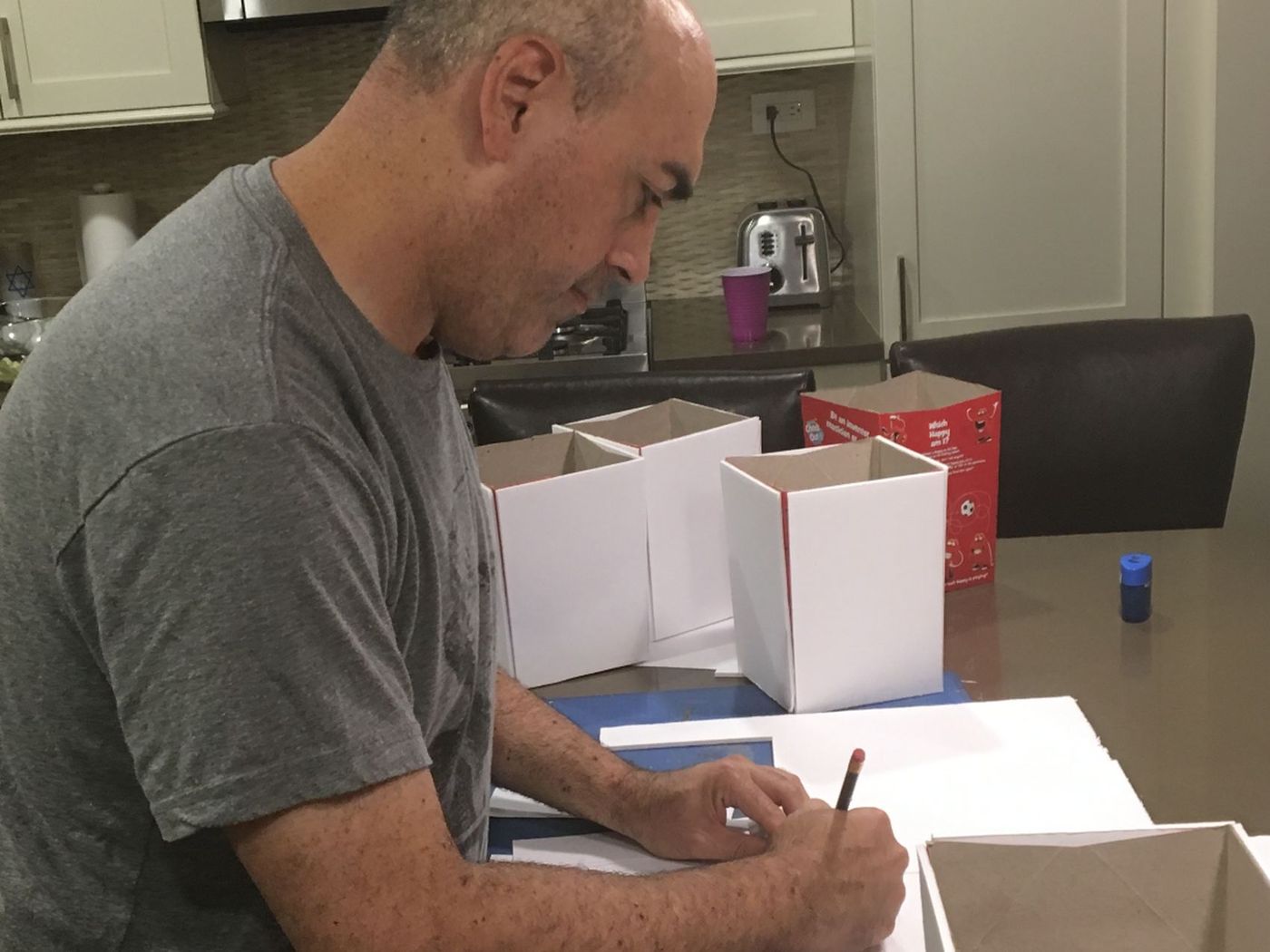
The composition is planned and adjusted many times before a single cut is made.

Measuring and drawing out a plan in pencil before any cutting
4

Cutting

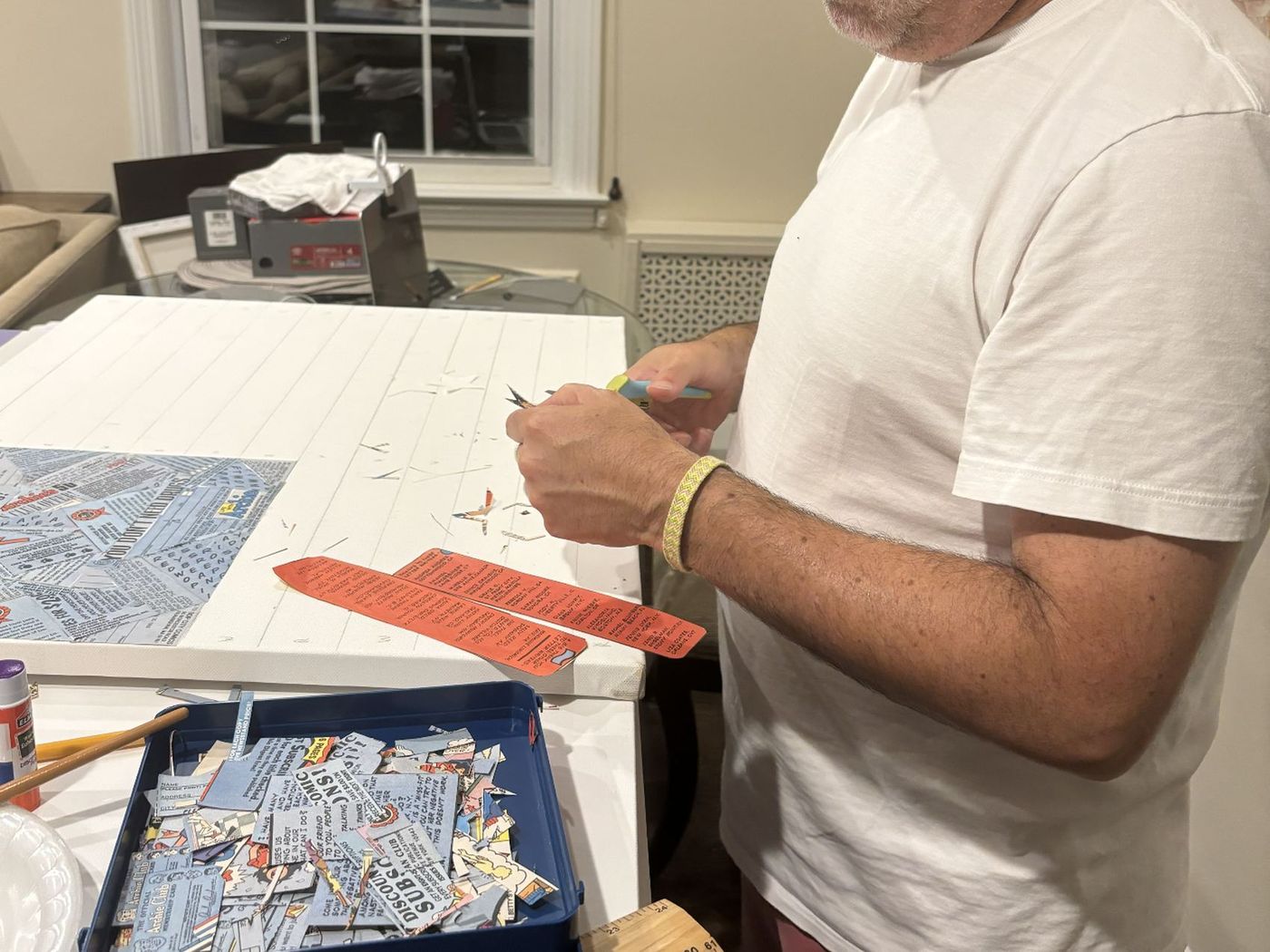
Every shape is cut by hand, one at a time, straight from the source. There is no machine step anywhere in the work. A single flag can take two to three thousand cuts.

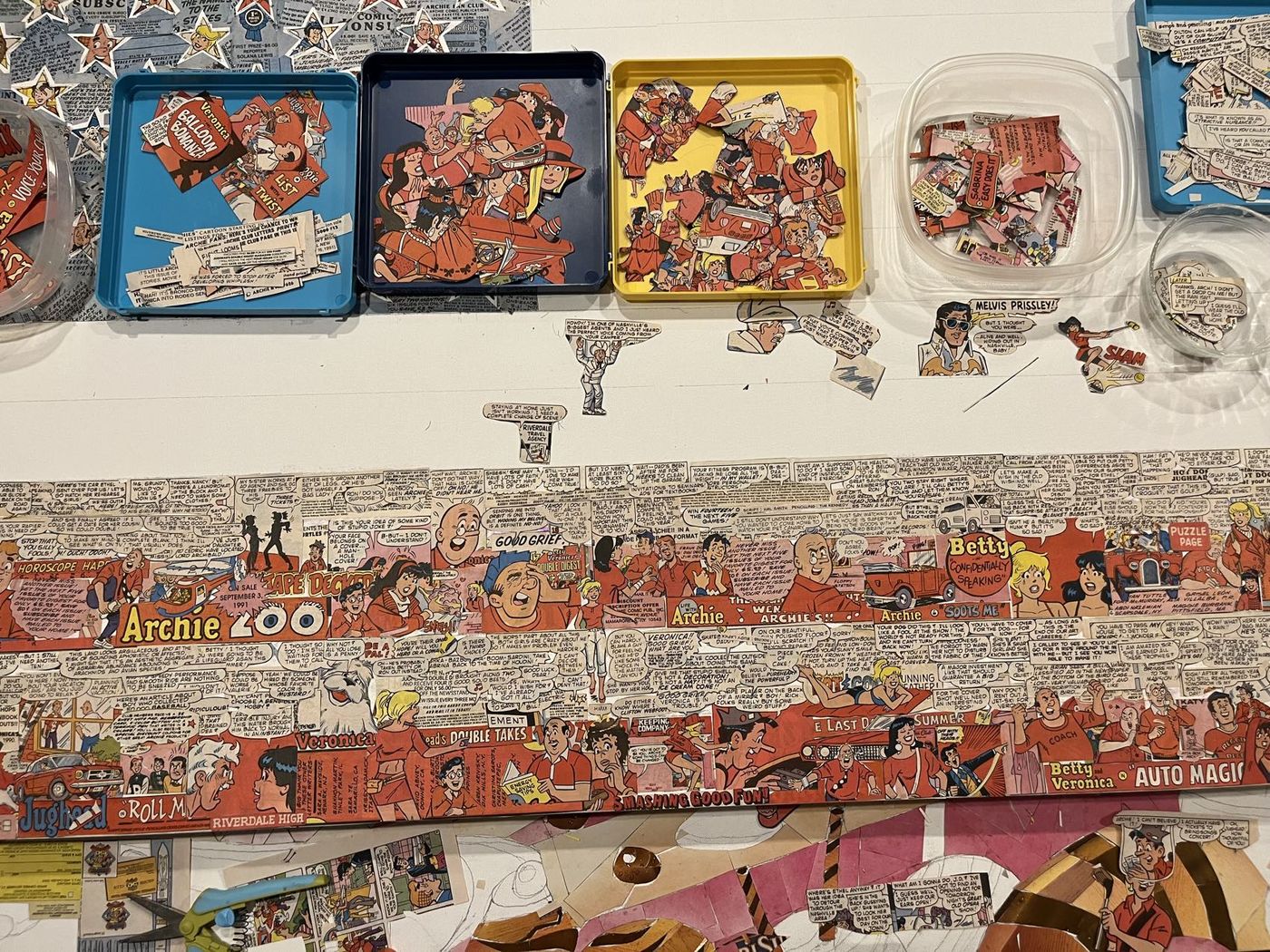
Cutting a strip of comic by hand at the canvas, beside a tray of fragments
5

Sorting

Cut fragments are sorted by color, character, and size before a single piece is placed. A large work needs thousands of pieces ready to go before assembly can begin.

Cut fragments sorted into trays by color and character
6

Pasting

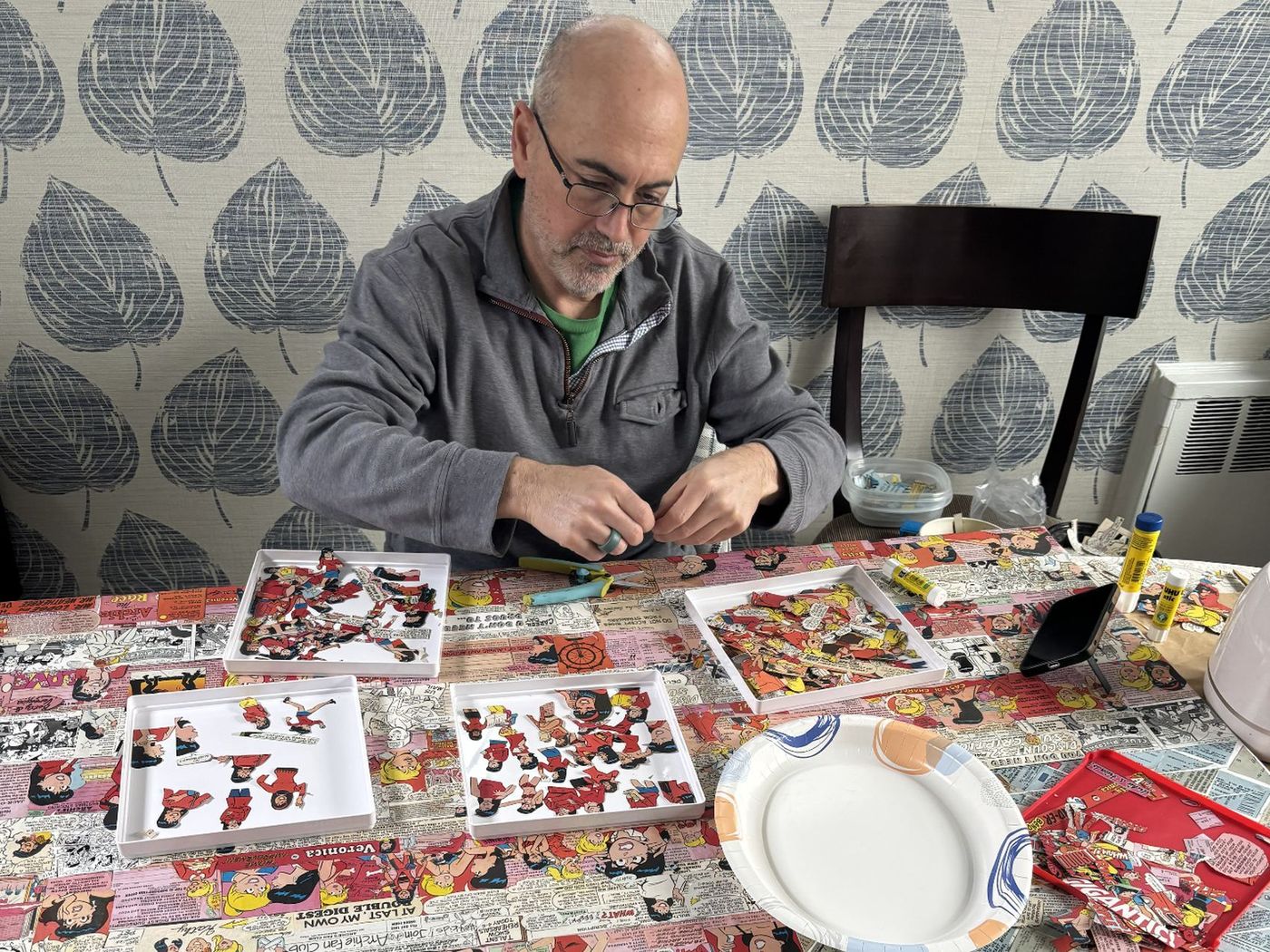
Fragments are pasted down one at a time, section by section, across bare canvas. Color and value are chosen piece by piece, so the composition only resolves near the end.

Pasting fragments down one at a time from sorted trays
7

Sealing

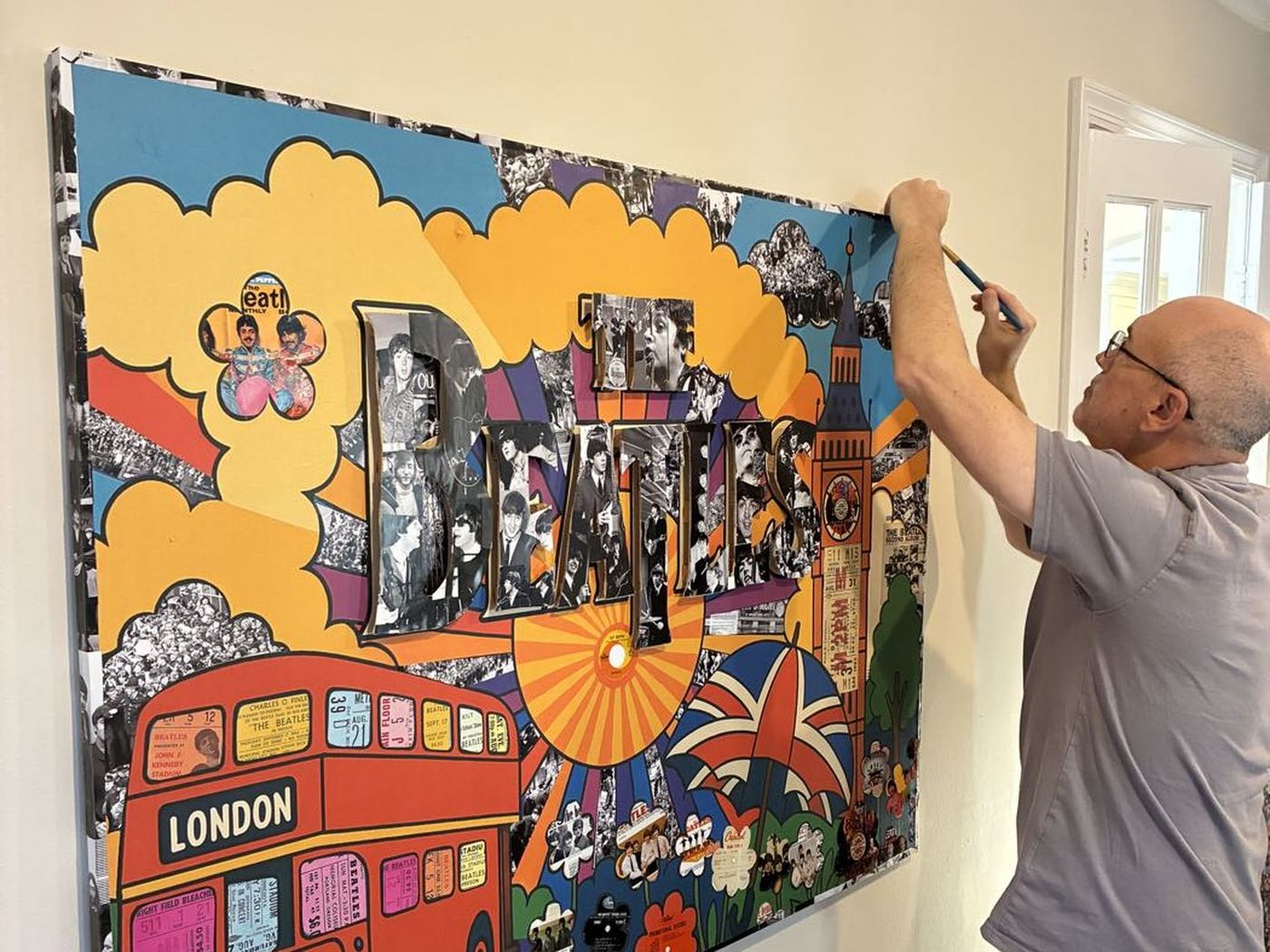
The finished collage is sealed with a protective coating that locks every fragment in place and shields the surface from light and dust.

A protective coating worked across the surface of a finished piece
About

It started with a cereal box.

I first tried my hand at collage when my daughters were 8 and 11. Both had taken a liking to Honey Nut Cheerios and were going through growth spurts. We were plowing through what felt like three boxes a week. I had a weird idea. What if, instead of throwing them out, I stashed them away until I had enough to make something out of them. One rainy Saturday afternoon I started cutting, just to see where it would go. This is where it ended up.

A Honey Nut Cheerios box Greg with his two daughters, around the years this started
My daughters, around the age they were when this started, and the box that started it.
The first collage, made entirely from Honey Nut Cheerios boxes
The first one. Made entirely from Honey Nut Cheerios boxes.

I was pretty happy with how it turned out, so I decided to challenge myself and see if I could take cereal boxes to the next level. “I wonder if I could do more than shapes. How about a person?” I chose the ultimate cereal box of my childhood: the Muhammad Ali Wheaties box, made out of nothing but Wheaties boxes. Just one problem. My kids weren’t down with that plan. They were too hooked on Honey Nut Cheerios to switch over to Wheaties. Thankfully I learned that people collect just about anything and most of it’s on sale on eBay. I bought a collection of 100 vintage Wheaties boxes. When the package arrived, I was like a kid opening presents on Christmas Eve. Alright, truth be told, I’m Jewish and never had that joy (I got Chanukah presents like socks or a corkboard, yippee), but if I ever got to open a Christmas present I imagine it feels something like that. One gem after another. Walter Payton, Mary Lou Retton, Michael Jordan.

That piece took me almost 9 months, late at night, after everyone went to bed, including a few near all-nighters as I dialed in on getting his nose, his ear, or his boxing glove just right. It was like doing a really challenging puzzle, but I was making the puzzle pieces myself along the way.

Greg working at a laptop with the finished Wheaties piece hanging behind him
The finished piece on the wall. 48 by 36 inches.
The finished Muhammad Ali Wheaties collage
Muhammad Ali, cut from 100 vintage Wheaties boxes.

I also love the challenge of only using the material I have. It makes it harder, but it forces even more creativity to fill the canvas with what is in front of me. I still work that way. I don’t buy more. I make it work with what I have, which often forces me to come up with more creative, interesting shapes.

I never use anything that’s truly valuable. Every comic comes from the dollar bin at my local comic book store. It’s all upcycled, giving new life to something that had served its purpose already. But it has to be the original material, for authenticity’s sake. There’s just no way to capture the actual look and feel and texture and imperfections of the original.

It’s all pop culture memories of my childhood. Iconic people, characters, products. I’m a pop culture kid of the 70s. I can still name any episode of the Brady Bunch in under 30 seconds. Test me.

Some people meditate, some soak in a hot tub, I do this. Even though it’s something most people would find insanely tedious, it relaxes me. It gets me in a flow state and shuts off my work brain.

Our daughters are grown now. They don’t eat Honey Nut Cheerios anymore and they’re not the reason things pile up around here. But I still stash stuff away. Vibrant material that evokes memories is what usually inspires my work. And because it all started with those two little girls and their cereal habit, the technique itself now carries memories of its own. I set out to capture my own childhood. Somewhere along the way I saved a piece of theirs too.

One daughter at her college graduation
UMD, 2024.
One daughter holding a finished Batman collage
Still willing to pose with the work.
Commissions

Three commissions a year. Weinstein decides what he takes on.

A commission starts with the collector's own material: the jersey, the album, the box that means something to them. Cut and rebuilt by hand, the same way as every gallery piece. Nothing printed, nothing reproduced.

Not every idea becomes a commission. The material has to hold a real story, and the piece has to earn its place beside the gallery work. Weinstein reviews each inquiry and takes on what he believes he can do justice to.

A commission follows the same process as any other piece: the source material is sourced, hand-cut into thousands of fragments, and rebuilt one at a time. No shortcuts, no printed elements, no digital reproduction at any stage.

Because the process takes months, only a small number of commissions are accepted each year, alongside the gallery work.

Status
Commissions open
Two of three slots remaining, 2026 · starting above $5,000
Start an inquiry
About ten works are completed each year. A commission takes one of those slots, so not every inquiry can be accepted.